In Europe the Gospel began with a vision in the night: a man of Macedonia asked Paul for help, and the apostle crossed the Aegean. This tour follows his route in the same direction – from the port of ancient Neapolis, today's Kavala, via Philippi, Thessaloniki and Berea to Corinth and Athens.
In between a second chapter opens: the world of faith of Greek Orthodoxy, which carries the heritage of the early churches forward to this day. You visit the Meteora monasteries on their rock pinnacles, a Byzantine monastery with precious mosaics and a convent at the foot of Mount Olympus, where a conversation about the life of the sisters is possible. A last excursion leads to Attica, to a monastery dedicated to the memory of Paul.
Antiquity has its say too – at Vergina with the tomb of Philip II, at Delphi, where an inscription attests the proconsul Gallio from Acts 18, and on the Acropolis. The result is a vivid picture of the world into which Paul preached, and of the Church that grew from his sowing.
The Bible reading path
Passages you will read on site
Acts 16:9–12Kavala (Neapolis)
The call to Macedonia and the landing at Neapolis – here the Gospel set foot on European soil.
Acts 17:1Amphipolis
On the way to Thessalonica Paul and Silas passed through Amphipolis – a short verse that writes the place into the Bible.
Acts 16:13–15Philippi
By the river outside the city God opens the heart of Lydia, the seller of purple – the first baptism in Europe of which the Bible tells.
Acts 16:25–34Philippi
At midnight Paul and Silas sing praises to God in prison; the jailer asks: What must I do to be saved?
Phil 1:3–6Philippi
The apostle's grateful greeting to the church that remained bound to him from the first day.
Acts 17:1–4Thessaloniki
For three sabbath days Paul reasons from the Scriptures in the synagogue, and a church comes into being.
Acts 17:10–12Berea (Veria)
The Bereans receive the word with all readiness of mind and search the Scriptures daily, whether those things are so.
Acts 18:12–17Delphi
An inscription found at Delphi names the proconsul Gallio, before whose judgment seat Paul stood in Corinth.
Acts 18:1–11Ancient Corinth
For a year and a half Paul teaches in Corinth, encouraged by the word: Be not afraid, but speak.
Rom 16:1–2Cenchreae
Phebe, a servant of the church at Cenchrea, is commended by Paul to the church in Rome.
Acts 17:22–31Areopagus, Athens
The speech about the unknown God, read at the rock where, according to tradition, it was delivered.
Tip: bring your own Bible – at each place we open the relevant passage together. Bible quotations: King James Version.
Day by day
Itinerary
Day1
Arrival in Macedonia
Thessaloniki → Amphipolis → Kavala
You travel to Thessaloniki independently. From there you head to Amphipolis, where a short stop is made at the Lion monument by the Strymon bridge – Paul passed through this city on his way to Thessalonica. On the coast you reach Kavala, ancient Neapolis, where the apostle first set foot on European soil. Walking through the old town you look down on the sea and the old harbour, where his ship, coming from Troas via Samothrace, put in.
Acts 16:9–12Acts 17:1
Day2
Philippi and Thessaloniki
Kavala → Philippi → Thessaloniki
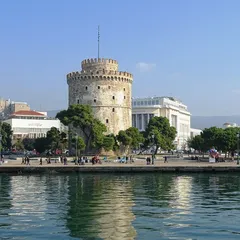
In Philippi, an important city of the Roman province of Macedonia, the first Christian church in Europe grew. The extensive excavation site brings the chapters of Acts to life: Lydia, who was baptised, and the night when Paul and Silas praised God in prison. Then you drive to Thessaloniki, a metropolis of antiquity and of Byzantium, where Paul founded a church. From the upper town the view sweeps far across the city to Mount Olympus.
Veria, biblical Berea, received Paul when he had to leave Thessalonica; its people “searched the scriptures daily”. A walk leads through the old town with its many churches and the former Jewish quarter. In Vergina, the first capital of the Macedonian kings, you see the tomb of Philip II, father of Alexander the Great. At the foot of Mount Olympus an Orthodox convent welcomes you for an encounter and conversation about the daily life of the sisters. In the afternoon you travel through the landscape of Thessaly.
Acts 17:10–12
Day4
Meteora – Monasteries between Heaven and Earth
Meteora → Central Greece
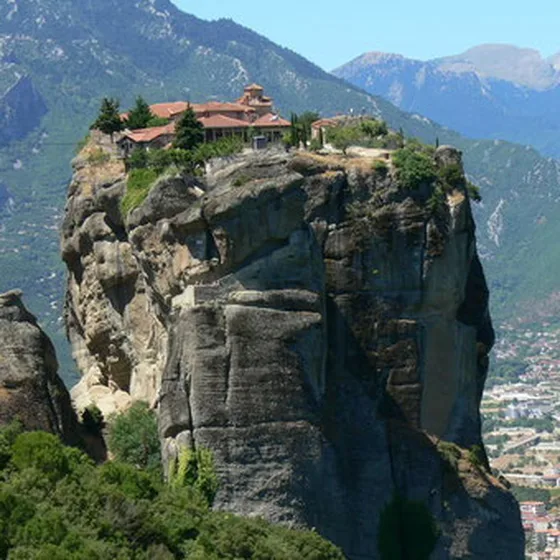
The morning belongs to the Meteora monasteries, which have stood on steeply rising rocks since the Middle Ages. Monks and nuns still live here in silence today, and during the visits you learn how prayer, liturgy and work order Orthodox monastic life. The history of the monasteries tells of people who sought seclusion in order to be closer to God. Then the drive leads through changing mountain landscapes and over several passes to Central Greece.
Day5
Delphi and Byzantine Mosaics
Delphi → Byzantine monastery
For centuries Delphi was considered the centre of the Greek world; those seeking counsel came from far and wide to the oracle of Apollo. A tour of the sanctuary shows how closely religion, politics and culture were intertwined in antiquity. Of note for Bible readers: the inscription naming the proconsul Gallio, which helps to date Paul's time in Corinth, was found at Delphi. Afterwards you visit a Byzantine monastery with outstanding mosaics; on the way back you stop at a memorial.
Acts 18:12–17
Day6
With Paul in Corinth
Peloponnese → Ancient Corinth → Cenchreae
On the way to the Peloponnese you visit an early Byzantine church, one of the oldest Christian buildings in the area, and a historic town whose museum opens up the mythology and everyday life of antiquity. Then Ancient Corinth: a port and trading city and, for a year and a half, the place where Paul worked, preaching and writing letters. Finally you reach Cenchreae, the ancient harbour named in Acts, which the Epistle to the Romans knows through Phebe, the servant of the church.
Acts 18:1–11Acts 18:18Rom 16:1–2
Day7
Mycenaean Culture and an Ancient Place of Healing
Peloponnese
In the morning you stand at one of the most important sites of Mycenaean culture, whose remains tell of the power and splendour of an early advanced civilisation of Greece. Afterwards you stroll through the old town of one of the most beautiful towns in the country, shaped by Venetian architecture. In the afternoon you visit one of the most famous healing centres of antiquity, which for centuries attracted the sick from all over the Mediterranean – a place that brings to mind the healing stories of the Gospels.
Day8
Athens: Acropolis and Areopagus
Acropolis → Museum → Agora → Areopagus
Today you reach Athens. The Acropolis with its monumental temples comes first, and the modern museum shows important finds from the ancient city. Then you go through the historic centre to the Agora and the Areopagus rock, from which, according to tradition, Paul spoke to the Athenians. Reading Acts 17 here, you sense how boldly the apostle translated the faith into the language of his listeners. A wide view over Athens closes the day.
Acts 17:16–34Overnight: Athens
Day9
A Monastery of St Paul in Attica and Journey Home
Attica → Athens Airport
To conclude, an excursion into the region of Attica leads to an Orthodox monastery dedicated to the memory of the Apostle Paul. In the peace of the place you can look back on the journey once more and bring it before God in prayer. Then the drive takes you to the airport, from where you begin your journey home independently – with the stations of an apostle in your heart who brought the Gospel to Europe.
⛔ No shopping stops: carpet, jewellery or leather showrooms are not part of this tour.
Included
Overnight stays as per itinerary
Transport as per programme
Sightseeing and monastery visits as per itinerary
Tour guide as per programme
Not included
Flights – on request we will enquire about suitable connections for you
Personal expenses
Services not mentioned in the itinerary
Good to know
Frequently asked questions
How much does the tour cost?
We quote the price on request: you will receive a personal offer for your date and your group – free and without obligation.
Are flights included?
No. You travel independently to Thessaloniki and return from Athens. We will gladly enquire about suitable connections for you.
Is the tour also suitable for Protestant or Free Church Christians?
Yes. The tour is aimed at Christians of all denominations. You get to know the Orthodox monasteries as guests who listen, ask questions and enter into conversation with one another.
Are there encounters in the monasteries?
At the convent at the foot of Mount Olympus an encounter with conversation about life and daily routine in the monastery is planned. At Meteora you gain insight into the history and monastic life.
Where does the tour begin and end?
The tour begins in Thessaloniki in the north and ends in Athens, so that you cross Greece once from north to south.
Enquiry & booking
Enquire about this tour
From Philippi to Athens – Paul, Meteora and Orthodox Greece