Twelve languages – like the twelve gates of the Holy City

“And had a wall great and high, and had twelve gates.” – Revelation 21:12

Genesis 10–12 · 15 days · Ankara – Kars

The Old Testament in Anatolia – Hittites, Abraham, Ararat

“Now the LORD had said unto Abram, Get thee out of thy country, and from thy kindred, and from thy father's house, unto a land that I will shew thee.”Genesis 12:1
Old Testament in Anatolia
15 days14 nights
AnkaraStart
KarsEnd
Price on requestPrice

From the sons of Noah to Abraham, from the Hittites to the land of Ararat: a remarkable number of names from the first chapters of the Bible have their place in today's Anatolia. This tour follows them for fifteen days across the entire highland – from Ankara in the west to Kars on the Armenian border, by coach all the way and with time for a reading at every site.

The journey begins with the Hittites: in Hattusa and Yazılıkaya you encounter a great empire whose treaties recall the structure of the biblical covenant. By way of Cappadocia – the land of Tabal in the Assyrian inscriptions – and Arslantepe near the Euphrates, you travel on to the stone circles of Göbekli Tepe and to Harran, the city from which Abram departed at the age of seventy-five.

In the Tur Abdin you hear the Lord's Prayer in the Aramaic language of the church; on Akdamar you read the prayer from the depths before the Jonah relief, and at the foot of Ararat the covenant with Noah. Ani concludes the journey. A state-licensed tour guide presents archaeology and tradition honestly and in context; Christians of all denominations are welcome.

The Bible reading path

Passages you will read on site

Psalm 139:9–10Ankara (welcome evening)

God's hand leads – at the start of a journey right across the highland.

Genesis 10Museum of Anatolian Civilizations

The Table of Nations as a guide: the peoples whose traces the museum displays.

Luke 2:1Temple of Augustus, Ankara

The emperor whose record of deeds is carved in stone here, in the Christmas Gospel.

Exodus 20:1–17Hattusa

The Ten Commandments – read where the state treaties of the great kings were kept in the archive.

Genesis 10:2–3; Ezek 27:13–14Cappadocia and Gürün

Tubal and Togarmah, sons of Japheth and of Gomer, as traders in the markets of Tyre.

Genesis 15:1–18On the Euphrates

The covenant with Abram as far as “the great river.”

Genesis 11:31–12:5Harran

Terah's journey to Haran and Abram's departure at God's word.

Josh 24:2–3Soğmatar

The fathers on the other side of the flood – before the traces of the moon cult.

Matt 6:9–13Mor Gabriel

The Lord's Prayer – prayed by arrangement in the Aramaic language of the church.

Genesis 2:10–14Hasankeyf on the Tigris

The four rivers of the Garden of Eden, among them the Hiddekel, the Tigris.

Jonah 2Akdamar

The prayer from the depths – before the Jonah relief of the Church of the Holy Cross.

2 Kgs 19:35–37Van Fortress

The end of Sennacherib and the flight of his sons into the land of Ararat.

Genesis 8:1–5; Genesis 9:8–17Durupınar and İshak Pasha Palace

The ark upon the mountains of Ararat and the covenant with every living creature.

Acts 1:8Ani

Unto the uttermost part of the earth: the witness that early on reached an entire nation in Armenia.

Tip: bring your own Bible – at each place we open the relevant passage together.
Bible quotations: King James Version.

Day by day

Itinerary

Day1

Arrival in Ankara – a beginning in the heart of Anatolia

Ankara Airport → Ankara

Your tour guide welcomes you at Esenboğa Airport and brings you to Ankara in just over half an hour. The capital of Turkey lies at around 900 meters in the middle of the Anatolian highland, which you will cross from west to east over the coming two weeks. In the late afternoon you climb through the lanes of the old town to the citadel, from which the view stretches far across city and steppe. At the welcome evening your tour guide introduces the route: the Hittites and the Table of Nations, Abraham in Harran, the Arameans of the Tur Abdin and the land of Ararat. To begin, you read Psalm 139 – the confession that God's hand leads, wherever the road may go.

Psalm 139:9–10Overnight: Ankara
Day2

Anatolia in the museum – and on to the land of the Hittites

Ankara → Boğazkale

The day begins at the Museum of Anatolian Civilizations, which tells the story of the land in a single tour: from Çatalhöyük via the Hittites to the Phrygians and Urartu. Here you meet for the first time the peoples whose names appear in Genesis 10, and the reliefs from Arslantepe, which you will visit later. At the Temple of Augustus you read the record of deeds of the emperor whose decree in the Gospel of Luke brings Mary and Joseph to Bethlehem; Ancyra was also the capital of the province of Galatia. Afterwards you travel east to Boğazkale. Its small museum houses the two sphinxes from the gate of the Hittite capital, which you will enter tomorrow. In the evening you consider together who the Hittites of the Bible were.

Genesis 10Luke 2:1Gal 1:2Genesis 23Overnight: Boğazkale
Day3

Hattusa – from state treaty to covenant

Boğazkale → Hattusa → Yazılıkaya → Alacahöyük → Boğazkale

For some 450 years Hattusa was the capital of the Hittites. On the circuit you see the Great Temple, the city walls with the Lion Gate and the King's Gate, and the tunnel of Yerkapı beneath the Sphinx Gate. In the storerooms archaeologists found thousands of clay tablets, among them the peace treaty between Hattusili III and Ramesses II. The treaties of the great kings follow a fixed structure: self-introduction, a review of benefits granted, stipulations, witnesses, blessing and curse. Many interpreters see in this a kinship with the Ten Commandments, which begin with God's act of deliverance – and so you read Exodus 20 here. In the rock sanctuary of Yazılıkaya a procession of gods moves across the rock face. In the afternoon you visit Alacahöyük with its Sphinx Gate.

Exodus 20:1–17Deuteronomy 30:15–20Overnight: Boğazkale
Day4

Merchants from Asshur – via Kültepe to Cappadocia

Boğazkale → Çorum → Kültepe → Göreme

Today a long travel day lies ahead of you, broken up by two stops. In the Çorum Museum you see finds from Alacahöyük and the region around the Hittite capital. The drive then continues via Yozgat southward to Kültepe, ancient Kanesh. Around 1900 BC merchants from Assur maintained a trading post here; their letters and accounts on more than twenty thousand clay tablets contain the oldest evidence of an Indo-European language. Asshur, a son of Shem in the Table of Nations, becomes tangible here as a people of traders who brought tin and textiles by donkey caravan. With Psalm 24 you remember to whom the earth and all who dwell therein belong. In the evening you reach Cappadocia.

Genesis 10:22Psalm 24:1Overnight: Cappadocia (Göreme)
Day5

Cappadocia – in the land of Tabal, in the secret place of the Most High

Göreme → Derinkuyu → Ihlara → Göreme

In Assyrian inscriptions the highland around Cappadocia is called Tabal – a name that many associate with Tubal from the Table of Nations and the prophet Ezekiel, though this is not certain. Later, the Book of Acts counts Jews from Cappadocia among the witnesses of Pentecost, and Peter writes to the Christians of this land. In the Göreme Open Air Museum you see rock-cut churches with frescoes of the life of Jesus. In the underground city of Derinkuyu, which reaches down several levels into the tuff, you read Psalm 91 about the secret place of the Most High. In the afternoon you walk through the Ihlara Valley; in the Ağaçaltı Church a fresco shows Daniel among the lions – an image of trust that accompanied generations of Christians here.

Acts 2:91 Pet 1:1Psalm 91:1–2Dan 6Ezek 27:13Overnight: Cappadocia (Göreme)
Day6

Gürün, Darende, Arslantepe – on the trail of Togarmah

Göreme → Gürün → Darende → Arslantepe → Malatya

A long travel day leads east across the highland into the valley of the Tohma. Near Gürün some scholars locate the city of Tegarama, which appears in Hittite and Assyrian texts, and link it with Togarmah, the son of Gomer in the Table of Nations, whose people, according to Ezekiel, brought horses and mules to the markets of Tyre. This interpretation is not certain, but it shows how concretely the Bible's names of nations are located in this landscape. Via Darende and its gorge you reach Arslantepe, ancient Melid, a World Heritage Site since 2021: palace buildings from the 4th millennium BC and the capital of a Neo-Hittite principality. Malatya was severely hit by the earthquake in 2023; with Psalm 46 you pray for the people here.

Genesis 10:3Ezek 27:141 Kgs 10:29Psalm 46:1–3Overnight: Malatya
Day7

Across the Euphrates to Göbekli Tepe

Malatya → Adıyaman → Euphrates → Göbekli Tepe → Şanlıurfa

From Malatya you travel south through the mountains via Adıyaman, which was also severely hit by the earthquake in 2023. Then the view opens onto the Euphrates, dammed here to form the great Atatürk Reservoir. The promise of land that God gave to Abram reaches as far as this river – while Joshua reminds us that the fathers on the other side of the river served other gods. In the afternoon you stand at Göbekli Tepe before the T-shaped pillars of a site built more than 11,000 years ago. It is an archaeological finding, not proof of a biblical account; there Psalm 90 invites you to reflect on the ages that are but as a day before God. In the evening you reach Şanlıurfa, ancient Edessa.

Genesis 15:1–18Josh 24:2Psalm 90:1–4Overnight: Şanlıurfa
Day8

Harran – where Abram set out

Şanlıurfa → Harran → Şuayb → Soğmatar → Şanlıurfa

Harran lies on the broad plain south of Şanlıurfa, near the Syrian border. Here Terah stopped with Abram, Sarai and Lot on the way to Canaan, and from here Abram departed at the age of seventy-five, as the LORD had spoken unto him. Among beehive mud-brick houses and the ruins of the Great Mosque you read of this departure and the story of Jacob, who fled to Laban in Haran. The ruined sites of Şuayb and Soğmatar tell of the cult of the moon god Sin, for which Harran was famous – a background to Joshua's words about the gods of the fathers. In the late afternoon you visit the pool of Balıklıgöl, which local tradition links with Abraham, and the Archaeological Museum.

Genesis 11:31–12:5Genesis 27:43Genesis 29:1–14Josh 24:2–3Overnight: Şanlıurfa
Day9

Mardin – the city set on a hill

Şanlıurfa → Mardin → Deyrulzafaran → Mardin

Across the Mesopotamian plain you travel to Mardin, whose stone houses cling to a hillside above the plain. Here Jesus' words about the city set on a hill read almost like a description of the place. In the old town you visit the Syriac Orthodox Church of the Forty Martyrs. In the afternoon you continue to the Monastery of Deyrulzafaran, for centuries until 1932 the seat of the Syriac Orthodox Patriarch. The liturgy is still celebrated here in Syriac, a form of Aramaic. The Arameans already appear in the Table of Nations, and when offering the firstfruits Israel confessed that its forefather had come from Aram. In the evening you watch the lights of the plain come on below you.

Matt 5:14–16Psalm 133Deuteronomy 26:5Overnight: Mardin
Day10

Tur Abdin – the Lord's Prayer in the language of Jesus

Mardin → Mor Gabriel → Midyat → Hasankeyf → Diyarbakır

The Tur Abdin, the “Mountain of the Servants of God,” is one of the oldest Christian landscapes in the world. In the Monastery of Mor Gabriel, founded in 397, monks and nuns still live today; here, by arrangement with the monastery, you pray the Lord's Prayer in the Aramaic language of the church – close to the language in which Jesus taught his disciples to pray. In Midyat you see the limestone houses and church towers of the old town. In the afternoon you reach Hasankeyf on the Tigris; since 2020 the old town has been flooded by the Ilısu Reservoir, and some monuments were relocated. By the river the Bible calls Hiddekel, you read about the four rivers of the Garden of Eden. In the evening you reach Diyarbakır.

Matt 6:9–13Genesis 2:10–14Deuteronomy 26:5Overnight: Diyarbakır
Day11

Amida on the Tigris – and up to Lake Van

Diyarbakır → Bitlis → Tatvan → Ahlat → Tatvan

In the morning you get to know Diyarbakır, ancient Amida: the dark basalt walls, together with the Hevsel Gardens, are a World Heritage Site, and the bridge of 1065 spans the Tigris. In the Syriac Orthodox Church of the Virgin Mary a small congregation still holds services today. Then begins a long drive up into the highland, through the Bitlis Gorge to Lake Van. In the Seljuk cemetery of Ahlat thousands of gravestones from the 12th to 15th centuries stand close to the shore – a place where the prayer of Moses carries weight: “So teach us to number our days, that we may apply our hearts unto wisdom.” You spend the night in Tatvan on the western shore of the lake.

Psalm 84:1Psalm 90:12Overnight: Tatvan
Day12

Akdamar and Tushpa – Jonah and the land of Ararat

Tatvan → Gevaş → Akdamar → Van

Along the southern shore of Lake Van you travel to the pier near Gevaş and cross by boat to Akdamar Island. The Church of the Holy Cross, built between 915 and 921, tells the Bible in pictures on its outer walls: Adam and Eve, Abraham and Isaac, David and Goliath, and Jonah, swallowed by the fish and cast out again. Before this relief you read Jonah's prayer from the depths. In the afternoon you climb the fortress rock of Van, ancient Tushpa, capital of the kingdom of Urartu – the “land of Ararat” to which the sons of Sennacherib fled. Carved into the rock is also an inscription of the Persian king Xerxes, whom many interpreters identify with the Ahasuerus of the Book of Esther.

Jonah 2Matt 12:402 Kgs 19:35–37Jer 51:27Overnight: Van
Day13

Before the mountains of Ararat – the covenant with every living creature

Van → Muradiye → Durupınar → İshak Pasha Palace → Doğubayazıt

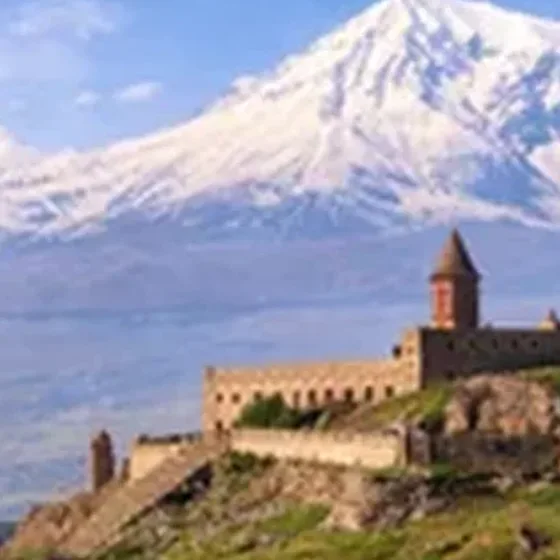
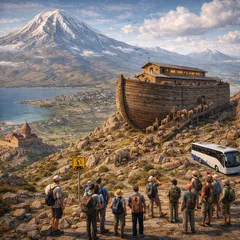
Along the northern shore of Lake Van and past the Muradiye waterfall you travel up onto the Çaldıran plateau, full of flowers in early summer. Near Durupınar a boat-shaped landform is shown which local tradition regards as the resting place of the ark; your tour guide honestly explains it as a natural formation. There you read of God's covenant with Noah and every living creature, and of the sign of the bow in the clouds. In the late afternoon you reach the İshak Pasha Palace high above Doğubayazıt. Before you rise Greater Ararat at 5,137 meters and Lesser Ararat. The Bible says “upon the mountains of Ararat,” meaning the land of Urartu; only the Middle Ages gave the summit its present name.

Genesis 9:8–17Genesis 8:1–5Overnight: Doğubayazıt
Day14

Ani – witnesses unto the uttermost part of the earth

Doğubayazıt → Iğdır → Ani → Kars

Early in the morning Ararat often stands in the clearest light above the Iğdır plain – a last look, with the pilgrim psalm. Through the Aras valley, past the salt mountains of Tuzluca, the road climbs to Ani. The medieval capital of the Armenian Bagratids lies on a plateau above the gorge of the Arpaçay, which today forms the border with Armenia. The cathedral of 1001, the Church of the Redeemer and the frescoes in the Church of Tigran Honents bear witness to how far the gospel traveled at an early date; here you read the word about witnesses unto the uttermost part of the earth. In the evening you reach Kars and, at the farewell dinner, give thanks with Psalm 104 for all you have seen.

Psalm 121:1–2Acts 1:8Psalm 104:24Overnight: Kars
Day15

Departure from Kars

Kars → Kars Airport

Depending on your flight time, there is time in the morning for the 10th-century Church of the Apostles in Kars, on whose drum the twelve apostles appear in relief; today it serves as a mosque. Then the transfer takes you to Kars Airport in a few minutes. For fifteen days you have followed the Old Testament through Anatolia: from the treaties of the Hittites via Abram's departure in Harran and the Aramaic prayers of the Tur Abdin to the land of Ararat. Anyone who would like to stay longer can add the monasteries of the Black Sea coast or beach days on the Mediterranean.

The route

On the map

Ankara Airport1Ankara AirportAnkara2AnkaraHattusa · Yazılıkaya3Hattusa · YazılıkayaAlacahöyük4AlacahöyükÇorum5ÇorumKültepe (Kanesh)6Kültepe (Kanesh)Göreme7GöremeDerinkuyu8DerinkuyuIhlara Valley9Ihlara ValleyGürün10GürünDarende11DarendeMalatya · Arslantepe12Malatya · ArslantepeAdıyaman13AdıyamanEuphrates (Atatürk Dam)14Euphrates (Atatürk Dam)Göbekli Tepe15Göbekli TepeŞanlıurfa16ŞanlıurfaHarran17HarranŞuayb18ŞuaybSoğmatar19SoğmatarMardin20MardinDeyrulzafaran21DeyrulzafaranMor Gabriel22Mor GabrielMidyat23MidyatHasankeyf24HasankeyfDiyarbakır25DiyarbakırBitlis26BitlisTatvan27TatvanAhlat28AhlatAkdamar29AkdamarVan30VanMuradiye Waterfall31Muradiye WaterfallDurupınar32DurupınarDoğubayazıt · İshak Pasha Palace33Doğubayazıt · İshak Pasha PalaceIğdır34IğdırAni35AniKars36KarsKars Airport37Kars Airport
1Ankara Airport2Ankara3Hattusa · Yazılıkaya4Alacahöyük5Çorum6Kültepe (Kanesh)7Göreme8Derinkuyu9Ihlara Valley10Gürün11Darende12Malatya · Arslantepe13Adıyaman14Euphrates (Atatürk Dam)15Göbekli Tepe16Şanlıurfa17Harran18Şuayb19Soğmatar20Mardin21Deyrulzafaran22Mor Gabriel23Midyat24Hasankeyf25Diyarbakır26Bitlis27Tatvan28Ahlat29Akdamar30Van31Muradiye Waterfall32Durupınar33Doğubayazıt · İshak Pasha Palace34Iğdır35Ani36Kars37Kars Airport
Inclusions & price

What the tour price includes

Price on request

The tour price depends on dates, group size and room allocation. You will receive your personal offer – free of charge and without obligation.

Enquire →

⛔ No shopping stops: carpet, jewellery or leather showrooms are not part of this tour.

Included

  • 14 nights in good mid-range and 4-star hotels with half board (simpler, well-kept accommodation in Boğazkale and Doğubayazıt)
  • All transport in an air-conditioned coach, airport transfers in Ankara and Kars
  • State-licensed tour guide – in English or in one of 25 languages
  • Admission fees as per the itinerary
  • Boat trip to Akdamar Island
  • Welcome and farewell evening

Not included

  • Flight
  • Lunches and drinks
  • Tips
  • Travel insurance
  • Personal expenses
Good to know

Frequently asked questions

How strenuous is the tour?

In 15 days you cover around 3,400 km by coach; Days 4 and 6 are very long travel days of around 450 km each, and Days 7, 10 and 11 also have longer stages. The paths in Hattusa, Ani and up to Van Fortress are uneven; a normal level of fitness is sufficient.

Do Göbekli Tepe or Durupınar prove the Bible?

No. Göbekli Tepe is an archaeological finding from the Stone Age, and Durupınar is a natural landform that local tradition regards as the resting place of the ark. We present both honestly and in context and read the biblical texts there – without any claim to proof.

Can the 2023 earthquake region be visited?

Malatya and Adıyaman were severely hit in February 2023; reconstruction is under way. We review hotels and the program before every departure and adjust the route if necessary.

Will we hear the Lord's Prayer in Aramaic?

At the Monastery of Mor Gabriel this is possible by arrangement with the monastery. It is an act of hospitality on the part of the monks, to which there is no entitlement.

When is the best time to travel?

From May to October. In winter the Eastern Anatolian highland has heavy snow and is very cold; in high summer it can get very hot in Şanlıurfa and Mardin.

Is the flight included in the tour price?

No. You fly into Ankara and out of Kars, usually with a change of planes in Istanbul. On request we will inquire about a suitable connection for you.

How much does the tour cost?

The price depends on the date, the group size and the room allocation. The tour can be booked as a church, group or private tour on your preferred date; after your inquiry you will receive a personal offer – free of charge and without obligation.

In which language is the tour guided?

A state-licensed tour guide accompanies you – in English or in one of 25 languages. We have been guiding guests since 1989.

Enquiry & booking

Enquire about this tour

The Old Testament in Anatolia – Hittites, Abraham, Ararat

Type of tour
Preferred travel period
Extension

Would you like to extend your trip?

Contact
Free of charge and without obligation – prices on request.
Questions? Message us!