Twelve languages – like the twelve gates of the Holy City

“And had a wall great and high, and had twelve gates.” – Revelation 21:12

Acts 16:14 · 15 days · Izmir – Adana

The Women of the Bible – from Lydia to Thecla

“And a certain woman named Lydia, a seller of purple, of the city of Thyatira, which worshipped God, heard us: whose heart the Lord opened, that she attended unto the things which were spoken of Paul.”Acts 16:14
The Women of the Bible
15 days14 nights
IzmirStart
AdanaEnd
Price on requestPrice

Anyone who reads the Acts of the Apostles and Paul’s letters attentively meets women at every turn: hostesses of house churches, teachers, prophetesses, mothers and grandmothers in the faith. Many of them lived in Asia Minor, today’s Turkey. This tour follows in their footsteps for some 2,500 kilometres, from the Aegean to the plain of Cilicia – and reads their stories where they belong.

The first week belongs to the west: Smyrna, Thyatira and Sardis, Philadelphia and Ephesus, Hierapolis, Laodicea and Colossae. Then the route climbs into the highlands – to Kelainai, where the Book of Esther gains a real historical backdrop, to Antioch in Pisidia, Lystra and Iconium. In Cappadocia Emmelia, Macrina and Nonna come to the fore; without them the great Church Fathers of the 4th century are unthinkable.

At the end stand Tarsus, Paul’s home town, and the sanctuary of Thecla near Silifke, which the pilgrim Egeria visited in 384. The Acts of Paul and other traditions are honestly presented as what they are. On request a state-licensed female tour guide leads the group. Women’s groups are just as welcome as whole congregations, home groups and married couples – Christians of all denominations.

The Bible reading path

Passages you will read on site

Luke 8:1–3Izmir (welcome evening)

The women who travelled with Jesus and ministered to him of their substance – the opening of the tour.

Acts 16:14–15, 40Thyatira

Lydia, whose heart the Lord opened, and her house as the first meeting place of the church.

Acts 18:18–26Ephesus

Priscilla and Aquila take Apollos in and expound to him the way of God.

1 Tim 2:8–15Ephesus (discussion)

A difficult passage, read against the background of the city and of the false teachings the letter addresses.

John 19:25–27Meryemana

The women beneath the cross and Jesus’ words to his mother and to John.

Luke 1:46–55Church of Mary, Ephesus

Mary’s song of praise in the church of the Council of 431.

Acts 21:8–9Hierapolis

The four prophesying daughters of Philip – the promise of Joel 2 fulfilled.

Col 4:15–16Laodicea

The greeting to Nympha and the church in her house.

Phlm 1–3Colossae

Apphia, Archippus and the church in Philemon’s house.

Esth 4:13–17Kelainai (Dinar)

Mordecai’s warning and Esther’s resolve: “If I perish, I perish.”

Acts 13:50–52Antioch in Pisidia

The honourable women of the city – this time on the side of the opponents.

2 Tim 1:5; 3:14–15Lystra

Grandmother Lois, mother Eunice and the Scriptures known from childhood.

Prov 31:10–31Göreme (Kızlar Manastırı)

The praise of the virtuous woman, read in the rock-cut convent.

Gal 3:26–28Adana (closing)

“There is neither male nor female” – unity in Christ at the close of the tour.

Tip: bring your own Bible – at each place we open the relevant passage together.
Bible quotations: King James Version.

Day by day

Itinerary

Day1

Arrival in Izmir – the women who travelled with Jesus

Izmir Airport → Izmir

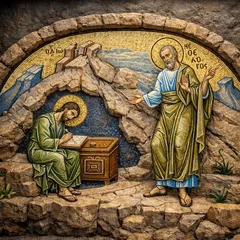
Your tour guide – on request a female guide – welcomes you at Izmir Airport and takes you into the city that the Book of Revelation calls Smyrna. In the late afternoon there is time for a stroll along the Kordon, the waterfront promenade on the gulf. At the welcome evening the route and key texts of the coming two weeks are introduced. For the first devotion you read how Jesus went through cities and villages – and with him not only the Twelve but also Mary Magdalene, Joanna the wife of one of Herod’s officials, Susanna and many others who supported him from their own means. With this picture begins a journey to women who carried the gospel.

Luke 8:1–3Overnight: Izmir
Day2

Smyrna, Thyatira and Sardis – Lydia’s home town

Izmir → Thyatira → Sardis → Salihli

The day begins at the Agora of Smyrna, the Roman marketplace in the heart of today’s Izmir. Here you read the letter to the church to which the crown of life is promised. Around 110, Bishop Ignatius expressly greeted women of the church in his letter to Smyrna. Then the route leads to Akhisar, ancient Thyatira. Inscriptions here attest a guild of dyers; from this city came Lydia, the seller of purple, whose heart the Lord opened in Philippi. The same Thyatira is known in Revelation as the place of a false prophetess – light and shadow lie close together. In the afternoon follow the mighty Temple of Artemis and the great synagogue of Sardis.

Rev 2:8–11Acts 16:14–15, 40Rev 2:18–29Rev 3:1–6Overnight: Salihli
Day3

Philadelphia and Ephesus – Priscilla and the house church

Salihli → Philadelphia → Ephesus → Kuşadası

Early in the morning you stand in Alaşehir, ancient Philadelphia, before the piers of a Byzantine basilica. To this church the Lord gave “an open door”. Eusebius reports that the prophetess Ammia ministered here, whom even the critics of later movements recognised as a true prophetess. After a long drive to the coast you reach Ephesus. On the Curetes Street, at the Terrace Houses and in the great theatre, the city comes alive in which Priscilla and Aquila led a house church and expounded to the learned Apollos the way of God “more perfectly”. In the evening you talk about 1 Timothy 2 and its Ephesian background – objectively and without imposing an interpretation on the group.

Rev 3:7–13Acts 18:18–26Rom 16:3–51 Cor 16:191 Tim 2:8–15Overnight: Kuşadası
Day4

Mary in Ephesus – Meryemana, the council church and the Basilica of St John

Kuşadası → Meryemana → Ephesus → Selçuk → Şirince → Kuşadası

In the morning you drive up the Hill of the Nightingale to the house of Meryemana. Lazarist priests from Smyrna found it in 1891 following the visions of Anne Catherine Emmerich; your tour guide places this tradition honestly in context, including the older tradition that locates the end of Mary’s life in Jerusalem. Established history is the Church of Mary down in Ephesus: here the Council of 431 confessed Mary as the Mother of God, and here you read her Magnificat. In Selçuk follow Justinian’s basilica over the traditional tomb of John and the museum with the statues of Artemis, whose cult shaped Ephesus. The afternoon belongs to the mountain village of Şirince; in the evening the songs of praise of Hannah and of Mary resound once more.

John 19:25–27Luke 1:46–55Acts 19:23–281 Sam 2:1–10Overnight: Kuşadası
Day5

Hierapolis – the prophesying daughters of Philip

Kuşadası → Tralles → Nysa → Pamukkale (Hierapolis)

Through the fertile Meander valley you drive to Tralles, to whose church Ignatius wrote one of his letters, and on to Nysa with its theatre and council chamber above a gorge. In the afternoon you reach Hierapolis. Along Frontinus Street you climb up to the Martyrium of Philip; beside it, in 2011, archaeologists discovered a church with the venerated tomb. Around 190, Bishop Polycrates wrote that Philip rested here with two of his daughters – in doing so he linked the evangelist of the Acts of the Apostles with the apostle of the same name. Luke calls the four daughters prophetesses; alongside this you read Joel’s promise that “your sons and your daughters shall prophesy”. To finish, you walk across the white travertine terraces.

Acts 21:8–9Joel 2:28Acts 2:17–18Overnight: Pamukkale
Day6

Laodicea and Colossae – Nympha, Apphia and the house churches

Pamukkale → Laodicea → Colossae → Aphrodisias → Pamukkale

In Laodicea you walk along the colonnaded streets to the great 4th-century church. Here you read the greeting in the letter to the Colossians to a hostess: the King James Version reads “Nymphas, and the church which is in his house”; modern textual scholarship, following the oldest manuscripts, reads a woman, Nympha, and “the church in her house”. Beneath Mount Honaz lies the barely excavated mound of Colossae. As is widely assumed, Philemon and Apphia lived here with the church in their house – Paul greets them, together with Archippus, at the opening of his letter. Across the highlands you drive to Aphrodisias, where the Temple of Aphrodite became a church in the 5th century – a quiet change of lordship.

Col 4:15–16Rev 3:14–22Phlm 1–3Col 1:7Overnight: Pamukkale
Day7

Kelainai – Esther and the empire of Ahasuerus

Pamukkale → Dinar (Kelainai) → Afyon

Past the salt lake of Acıgöl the road climbs into the Phrygian highlands. In Dinar rise the springs of the Meander; above them lay Kelainai, the seat of Persian satraps. Herodotus reports that Xerxes halted here in 481 BC on his campaign against Greece. In him most interpreters see Ahasuerus, at whose court Esther became queen. In this place you read Mordecai’s warning and Esther’s courageous resolve to go before the king for her people. The later city of Apamea minted coins showing Noah and his wife in the ark. In the afternoon you reach Afyon; in the museum and in the evening discussion the focus is on the Jewish diaspora of Phrygia.

Esth 1:1–8Esth 4:13–17Genesis 7:7Overnight: Afyon
Day8

Antioch in Pisidia – the honourable women of the city

Afyon → Antioch in Pisidia → Eğirdir

Across the highlands south of the Sultan Mountains you reach Yalvaç and the ruins of Antioch in Pisidia. From the Temple of Augustus the Via Tiberia leads downhill; below lie the remains of a great 4th-century church. Here you read Paul’s first sermon recorded in detail and the words about the light of the Gentiles. Luke also relates that the opponents stirred up “the devout and honourable women” of the city against the apostles – women of rank held influence and offices in the cities of Asia Minor. In the museum, inscriptions show the family of the Sergii Paulli, which some scholars connect with the proconsul of Acts 13. In the afternoon you reach Eğirdir on its lake.

Acts 13:14–52Acts 17:4, 12Overnight: Eğirdir
Day9

Lystra and Iconium – Lois, Eunice and Thecla

Eğirdir → Beyşehir → Lystra → Konya

Through the Lake District with Lake Beyşehir the long drive leads into the steppe of Lycaonia. Near Hatunsaray rises the mound of Lystra, confirmed in 1885 by a Latin inscription. Here Paul was stoned, and here lived Eunice, a believing Jewess married to a Greek. Paul reminds Timothy of the unfeigned faith that dwelt first in his grandmother Lois and his mother Eunice. In the afternoon you stand in Konya, the Iconium of the Acts of the Apostles, on the citadel hill and in St Paul’s Church. Here the story of Thecla from the Acts of Paul, a 2nd-century writing, begins: the young woman who hears Paul preaching from her window.

Acts 14:1–20Acts 16:1–32 Tim 1:52 Tim 1:16Overnight: Konya
Day10

To Cappadocia – the rock-cut convent

Konya → Sille → Sultanhanı → Göreme

In the village of Sille near Konya stands a church which, according to local tradition, goes back to Helena, the mother of Emperor Constantine, who is said to have been here in 327 on her way to Jerusalem; the present building dates from the 19th century. Along the old trade route with the caravanserai of Sultanhanı you drive to Cappadocia. In the afternoon the Göreme Open Air Museum opens up with its rock-cut churches. Right by the entrance rises, over several storeys, the Kızlar Manastırı, the convent in which women led a life of prayer and work. There you read the praise of the virtuous woman from Proverbs 31 – written for everyday life, lived out in the rock.

Prov 31:10–31Overnight: Göreme
Day11

Emmelia, Macrina and Nonna – the women of the Cappadocian Fathers

Göreme → Derinkuyu → Güzelyurt → Ihlara Valley → Göreme

In the underground city of Derinkuyu you descend through narrow passages, storey by storey, into the tuff. Then you drive to Güzelyurt, the old Gelveri, into the region of Nazianzus. Here lived Nonna, the mother of Gregory of Nazianzus, who led her husband to faith; Gregory praised her and his sister Gorgonia in his funeral orations. In the discussion Emmelia and Macrina join them: Basil’s mother and her daughter, who turned the family estate at Annisa in Pontus into a spiritual community and whom Gregory of Nyssa called his teacher. Their conversation about the resurrection leads to 1 Corinthians 15. In the afternoon you walk through the green Ihlara Valley.

Psalm 90:11 Cor 15:51–55Psalm 1:3Ruth 1:16–17Overnight: Göreme
Day12

Through the Cilician Gates to Tarsus

Göreme → Niğde → Cilician Gates → Tarsus → Mersin

In the morning, near Niğde, you visit the rock-cut monastery of Eski Gümüş, whose 11th-century frescoes show Mary with the Child in rare freshness. Then the road climbs into the Taurus. At the Cilician Gates, the narrow pass between highlands and coast, you walk a short stretch; Alexander marched through here, and Paul probably came up this way on his second journey. In the afternoon you reach Tarsus with St Paul’s Well, the Roman road and Cleopatra’s Gate. In this city Paul grew up; here too, it seems, lived his sister, whose son later saved his life in Jerusalem. In the evening you reach Mersin.

Acts 15:41–16:1Acts 21:39Acts 22:3Acts 23:16–22Overnight: Mersin
Day13

Hagia Thekla – Egeria’s place of pilgrimage

Mersin → Silifke (Ayatekla) → Kızkalesi → Kanlıdivane → Kızkalesi

South of Silifke stand the remains of the great basilica that Emperor Zeno had built over the cave of Thecla in the 5th century. Here came the pilgrim Egeria in 384; she met the deaconess Marthana, who led communities of consecrated women, and read the Acts of Thecla on the spot. Your tour guide explains what these 2nd-century Acts of Paul are: a non-biblical narrative, disputed early on, which nonetheless shows how greatly women helped to shape the first centuries of the faith. On the way to Kızkalesi you stop at Cennet Cave with its chapel of Mary; in the afternoon the ruined city of Kanlıdivane follows. In the evening, by the sea, you read of the cloud of witnesses.

2 Tim 3:10–11Heb 11:32–12:2Overnight: Kızkalesi
Day14

Adana and Misis – there is neither male nor female

Kızkalesi → Adana → Misis → Adana

Past Mersin you drive into the wide plain of Cilicia to Adana. In the museum complex, housed in a former textile factory, you encounter finds from the Hittites to Byzantium; afterwards you cross the Roman stone bridge over the Seyhan. In the afternoon you reach Misis, ancient Mopsuestia, where Theodore served as bishop around 400. A mosaic from a 4th-century church shows the animals going into the ark and scenes from the life of Samson. Back in Adana you hold the closing devotion: from Lydia to Thecla you have come to know women who carried the gospel. Paul sums it up: “There is neither male nor female: for ye are all one in Christ Jesus.”

Genesis 7:1–9Gal 3:26–28Overnight: Adana
Day15

Journey home from Adana-Mersin (Çukurova)

Adana → Çukurova Airport

On the last morning, depending on your flight time, there is time for a walk along the Seyhan or a leisurely breakfast. Then the transfer takes you in about forty minutes to Adana-Mersin Airport near Tarsus. You take home the names you have encountered in these two weeks: Lydia and Priscilla, Mary, the daughters of Philip, Nympha and Apphia, Esther, Lois and Eunice, Macrina and Nonna, Thecla and Egeria. They have enriched your picture of the first churches with many faces. Anyone who would like to stay longer can extend with beach days in Kızkalesi or with an excursion to Antakya.

The route

On the map

Izmir Airport1Izmir AirportIzmir (Smyrna)2Izmir (Smyrna)Thyatira (Akhisar)3Thyatira (Akhisar)Sardis4SardisSalihli5SalihliPhiladelphia (Alaşehir)6Philadelphia (Alaşehir)Ephesus · Meryemana7Ephesus · MeryemanaKuşadası8KuşadasıŞirince9ŞirinceTralles (Aydın)10Tralles (Aydın)Nysa11NysaHierapolis (Pamukkale)12Hierapolis (Pamukkale)Laodicea13LaodiceaColossae14ColossaeAphrodisias15AphrodisiasDinar (Kelainai)16Dinar (Kelainai)Afyon17AfyonAntioch in Pisidia18Antioch in PisidiaEğirdir19EğirdirLystra20LystraKonya (Iconium)21Konya (Iconium)Sille22SilleSultanhanı23SultanhanıGöreme24GöremeDerinkuyu25DerinkuyuGüzelyurt (Gelveri)26Güzelyurt (Gelveri)Ihlara Valley27Ihlara ValleyNiğde28NiğdeCilician Gates29Cilician GatesTarsus30TarsusMersin31MersinSilifke · Ayatekla32Silifke · AyateklaKızkalesi33KızkalesiKanlıdivane34KanlıdivaneAdana35AdanaMisis (Mopsuestia)36Misis (Mopsuestia)Çukurova Airport37Çukurova Airport
1Izmir Airport2Izmir (Smyrna)3Thyatira (Akhisar)4Sardis5Salihli6Philadelphia (Alaşehir)7Ephesus · Meryemana8Kuşadası9Şirince10Tralles (Aydın)11Nysa12Hierapolis (Pamukkale)13Laodicea14Colossae15Aphrodisias16Dinar (Kelainai)17Afyon18Antioch in Pisidia19Eğirdir20Lystra21Konya (Iconium)22Sille23Sultanhanı24Göreme25Derinkuyu26Güzelyurt (Gelveri)27Ihlara Valley28Niğde29Cilician Gates30Tarsus31Mersin32Silifke · Ayatekla33Kızkalesi34Kanlıdivane35Adana36Misis (Mopsuestia)37Çukurova Airport
Inclusions & price

What the tour price includes

Price on request

The tour price depends on dates, group size and room allocation. You will receive your personal offer – free of charge and without obligation.

Enquire →

⛔ No shopping stops: carpet, jewellery or leather showrooms are not part of this tour.

Included

  • 14 nights in good mid-range and 4-star hotels with half board
  • All journeys in an air-conditioned coach, airport transfers in Izmir and Adana-Mersin (Çukurova)
  • State-licensed tour guide – on request a female guide
  • Admission fees as per the programme
  • Devotions and readings on site, worship services subject to permission
  • Welcome and farewell evenings

Not included

  • Flight
  • Lunches and drinks
  • Tips
  • Travel insurance
  • Personal expenses
Good to know

Frequently asked questions

Can the tour be booked with a female tour guide?

Yes. On request you will be accompanied by a state-licensed female tour guide – in your language or in any of 25 languages. Please mention this wish in your enquiry.

Is the tour only for women?

No. The tour is particularly suitable for women’s groups, but is intended just as much for congregations, home groups and married couples – Christians of all denominations are welcome.

Nymphas or Nympha – who was it in Colossians 4:15?

The King James Version reads “Nymphas, and the church which is in his house”. Modern textual scholarship follows the oldest manuscripts and reads a woman, Nympha, with “the church in her house”; more recent translations render it this way.

Is Thecla a biblical figure?

No. Thecla appears in the Acts of Paul, a non-biblical writing from the 2nd century. We visit her sanctuary as a witness to early piety and clearly identify the narrative as tradition.

How strenuous is the tour?

Days 3, 6, 9 and 12 are long travel days with around four hours on the coach. Ephesus, Hierapolis and the Ihlara Valley involve walks of up to 5 km on uneven ground; an average level of fitness is sufficient.

When is the best time to travel?

April to June and September to October. In high summer it gets very hot in the Aegean and in Cilicia; in winter the highlands around Afyon and Cappadocia are cold.

Is the flight included in the tour price?

No. You fly into Izmir and out of Adana-Mersin (Çukurova), usually with a change in Istanbul. On request we will look into a suitable connection for you.

What does the tour cost and when does it take place?

Dates and price depend on your group; the tour can be booked as a church, group or private tour. After your enquiry you will receive a personal offer – free of charge and without obligation.

Enquiry & booking

Enquire about this tour

The Women of the Bible – from Lydia to Thecla

Type of tour
Preferred travel period
Extension

Would you like to extend your trip?

Contact
Free of charge and without obligation – prices on request.
Questions? Message us!